

Bonny M | April 14, 2026
In 2018, what began as a simple curiosity about a natural water source on a family property evolved into a purpose-driven brand grounded in sustainability, community, and conscious living. For founder Zane Rabey, 15 On Grace was never intended to be just another water company, it was built as a response to a deeper philosophy: to create something meaningful, responsible, and rooted in long-term impact rather than short-term gain.
Zane’s connection to sustainability runs far beyond business. With a lifelong passion for growing vegetables, cultivating fruit trees, and living close to nature, the discovery of a naturally sourced water supply on the family property along Grace Road became a defining moment. Initially tested for irrigation purposes, the water revealed itself to be of exceptional drinking quality. That discovery sparked the idea to bottle and share it, but with a clear intention to do things differently from the start.
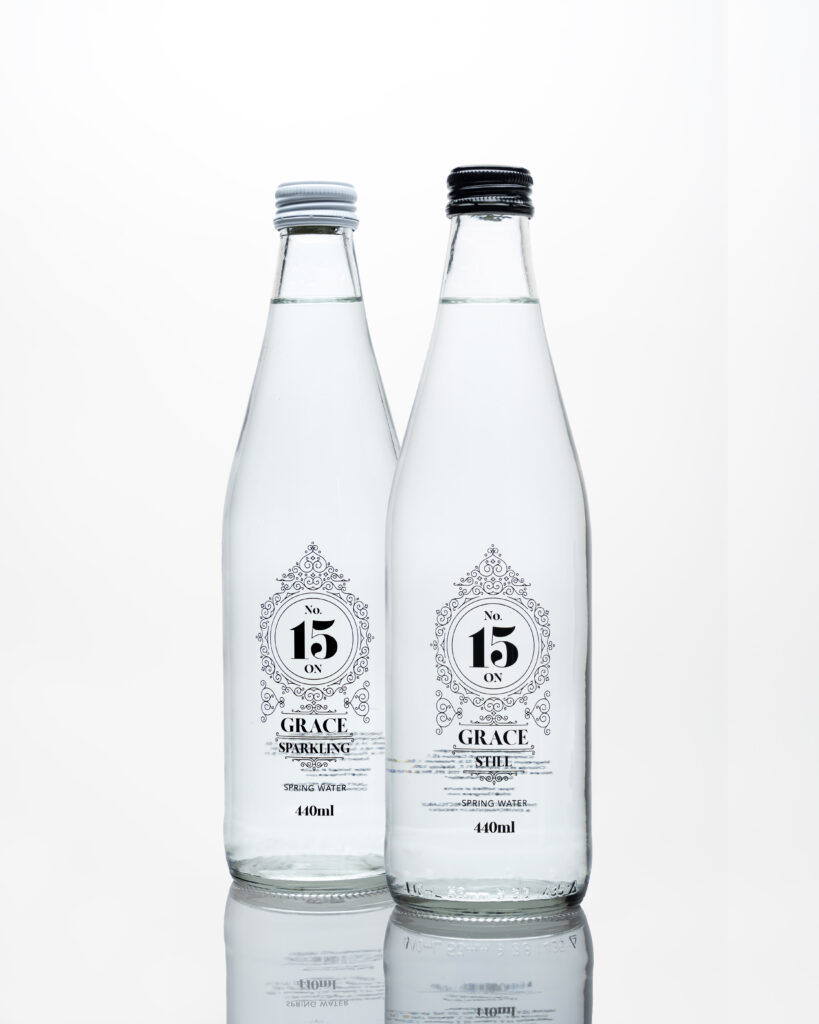
From inception, sustainability was not an added feature; it was the foundation. One of the brand’s earliest decisions was to implement a return-and-reuse glass bottle system, a model designed to significantly reduce waste and environmental impact. Rather than treating packaging as disposable, bottles are circulated, cleaned, and reused, creating a circular system that minimizes carbon emissions and resource consumption. This approach not only supports environmental responsibility but also offers practical value to clients, particularly within the food service industry.
While glass is often viewed as an eco-friendly packaging solution, 15 On Grace challenges the assumption that recycling alone is the most sustainable path. The production and recycling of glass require high energy consumption due to the extreme temperatures needed for melting. By prioritising reuse over repeated recycling, the brand reduces the overall energy footprint while extending the lifecycle of each bottle.
This principle of “reducing what we throw away and reusing what we can” extends throughout the company’s operations. A conscious effort is made to repurpose materials wherever possible, recycle when necessary, and avoid unnecessary waste. Sustainability, in this sense, is not confined to packaging, it is embedded in the decision-making process at every level of the business.
At the core of the product is its natural source: an underground aquifer in Olifantsfontein, surrounded by granite rock. This geological environment plays a crucial role in shaping the water’s natural mineral content and smooth taste. The water is drawn and then carefully processed through a series of steps designed to preserve its integrity. These include pre-filtration using natural media, UV sterilisation, and ultra-filtration, methods that ensure safety and consistency without stripping away the water’s inherent qualities.
Unlike highly processed alternatives such as reverse osmosis, which remove both impurities and beneficial minerals, 15 On Grace maintains the natural composition of the water. This aligns with the belief that water, a vital component of human health, should retain the nutrients naturally present within it.
Local sourcing is another cornerstone of the brand’s approach. By working entirely within South Africa for its supply chain, 15 On Grace reduces transport-related emissions while supporting local industries. This commitment to local production also contributes to economic growth and job creation within surrounding communities. For Zane, the ability to provide employment opportunities and support households is one of the most meaningful aspects of building the brand.
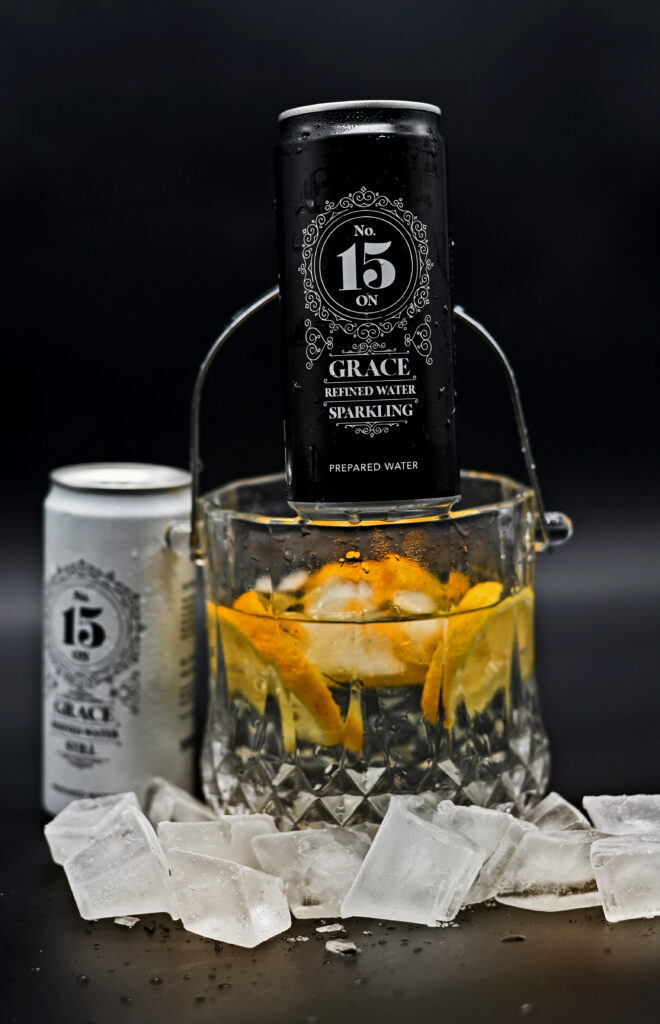
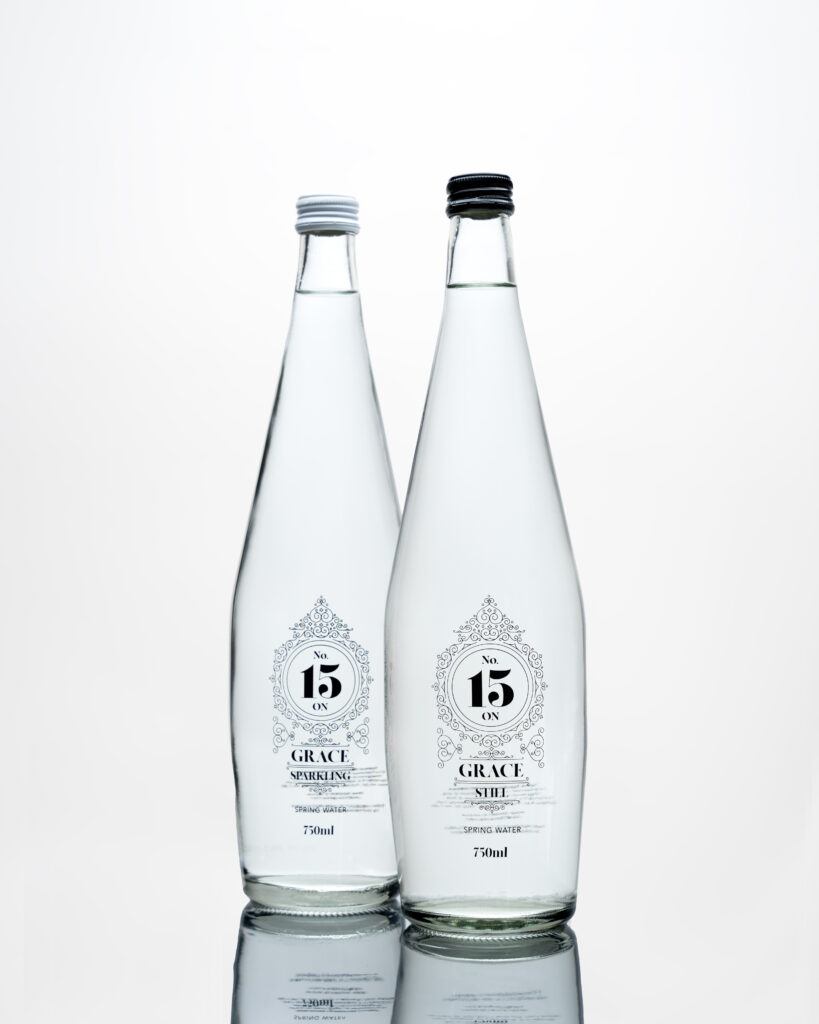
The product range itself has been developed with both practicality and consumer experience in mind. Glass bottles, available in formats such as 750ml, align with the return-and-reuse system and are well-suited for food service environments. The introduction of the 300ml can was informed by market research, identifying the ideal single-serving size for consumers. Designed to be consumed in one sitting, it reflects a thoughtful understanding of lifestyle and convenience while maintaining the brand’s commitment to sustainability.
Still water remains the leading product within the range, appreciated for its clean, refreshing profile and naturally smooth finish. The sparkling variant, crafted to European standards with a finer carbonation structure, caters to a growing segment of consumers who prefer a more refined sparkling experience. Together, these offerings represent a balance between simplicity and sophistication.
Building a sustainable brand, however, requires more than infrastructure, it requires patience and education. Encouraging consumers to adapt to return-and-reuse systems introduces an additional step in the consumption process, which can sometimes challenge convenience-driven habits. To address this, 15 On Grace has focused on clear communication, consistency, and offering financial incentives that make sustainable choices more accessible and rewarding.
Ultimately, 15 On Grace is a brand defined by intention. From its origins on a family property to its current presence within the food service industry, it reflects a commitment to doing business in a way that respects both people and the planet. It is a reminder that even something as simple as water can carry meaning when approached with purpose, and that sustainability, when built into the foundation, has the power to shape not only a product, but a lasting impact.

What does your vision for a sustainable future look like, and how do you hope your brand continues to help save the planet one bottle at a time?
We hope to compete on a national retail scale with our canned water which will then allow us to seriously compete with single use plastic bottles and decrease the amount of them going into the market. We also hope to compete on a national scale in the food services industry allowing us to compete against single use and imported glass bottled.